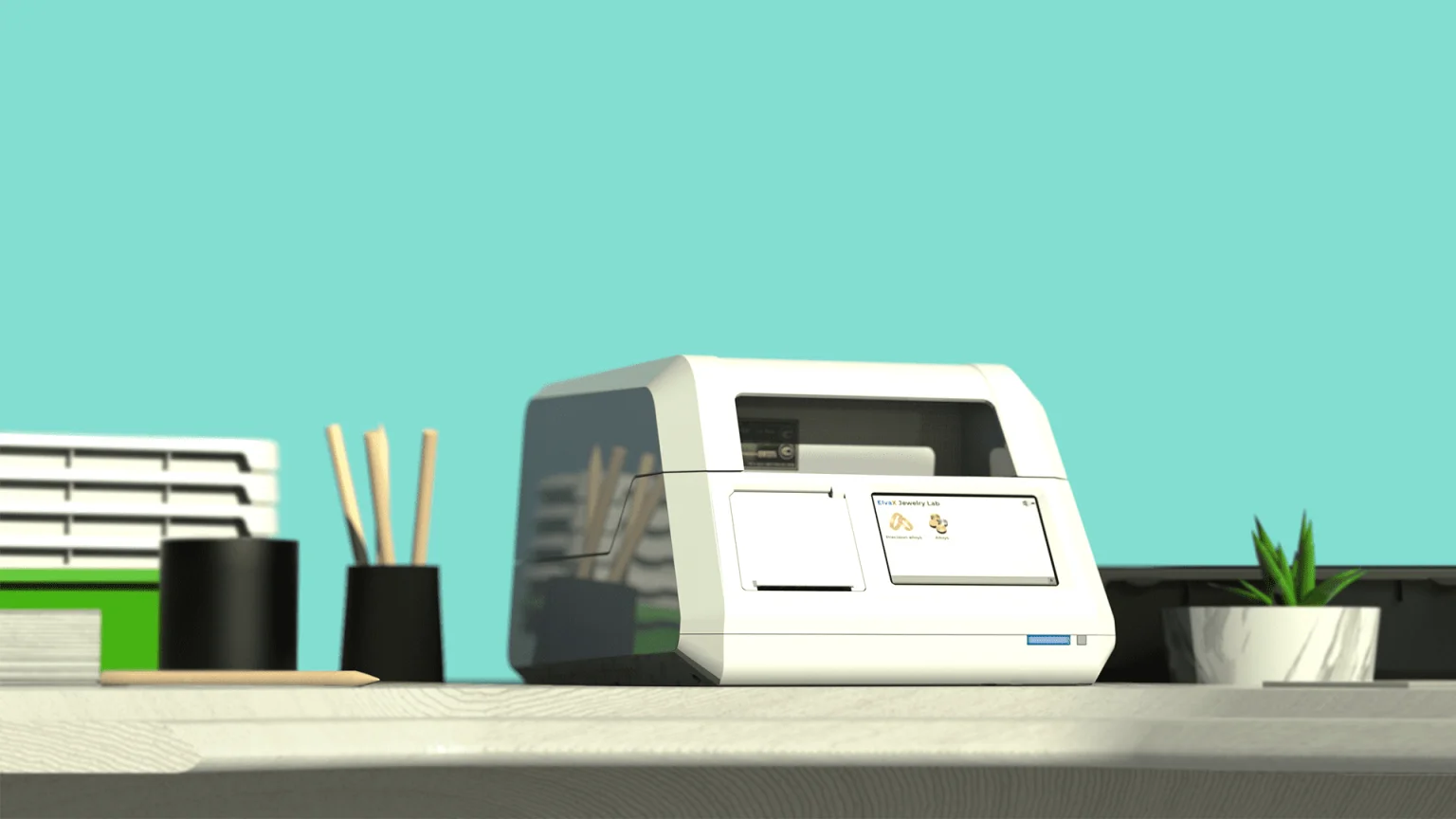
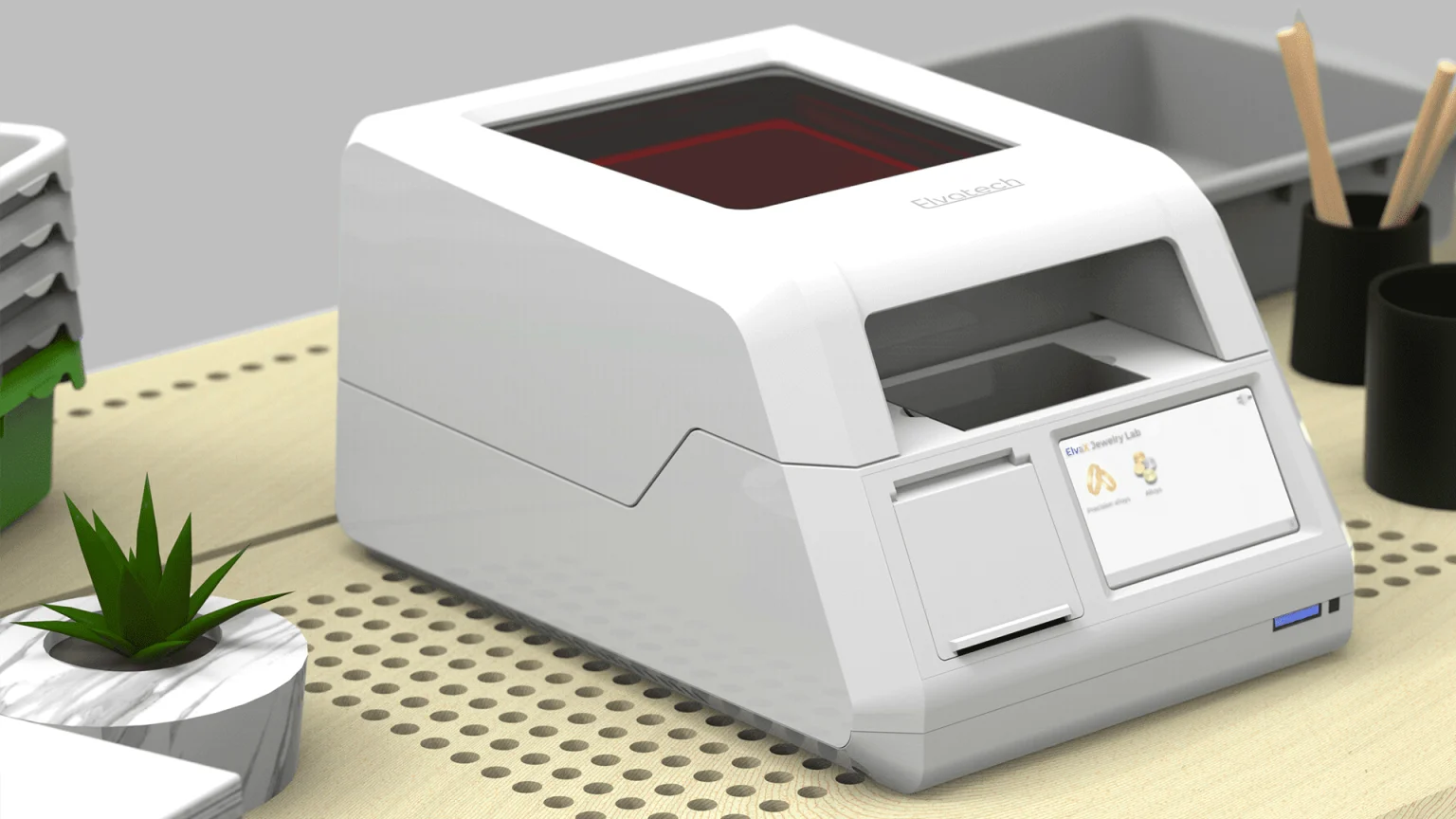
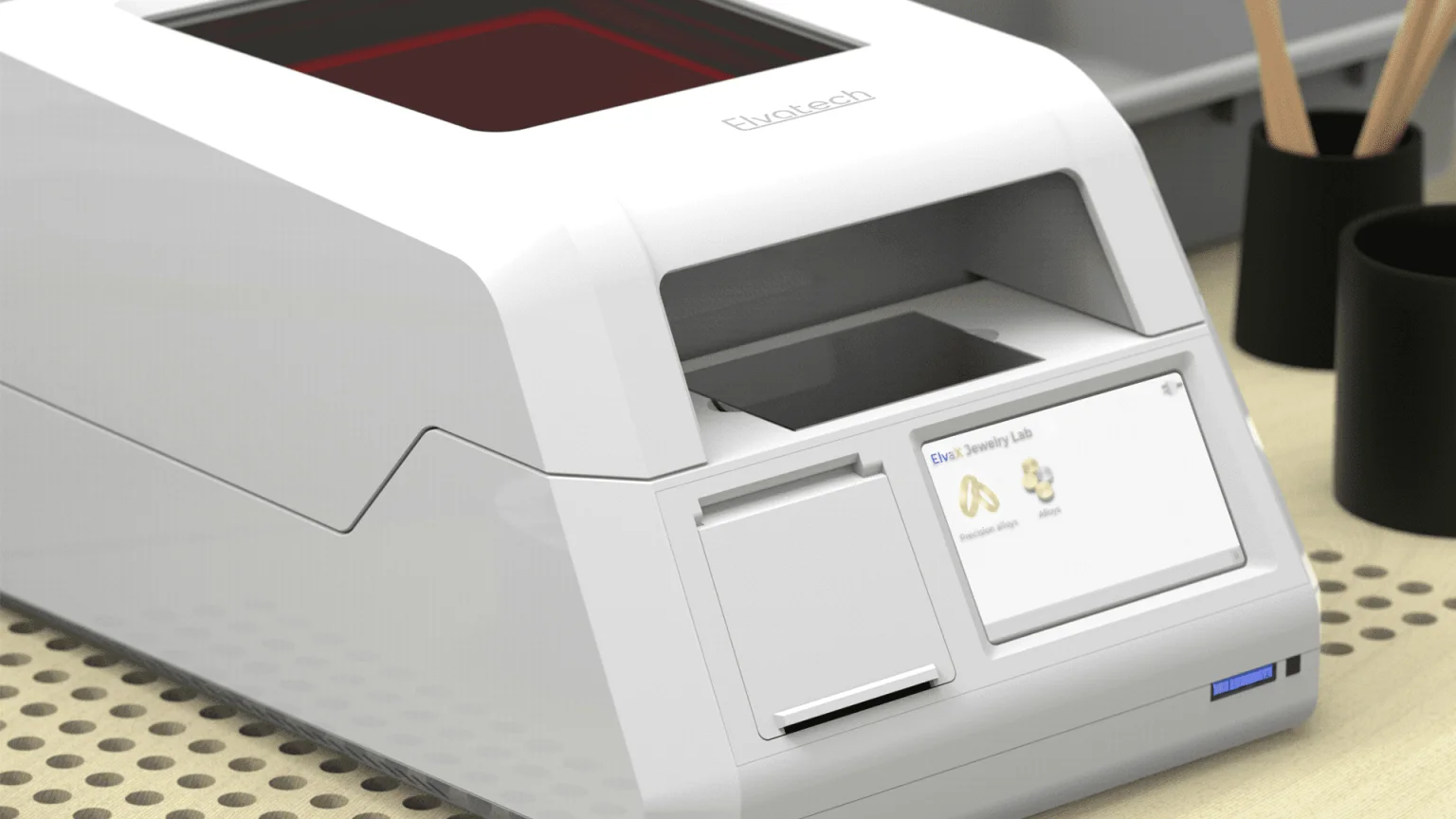
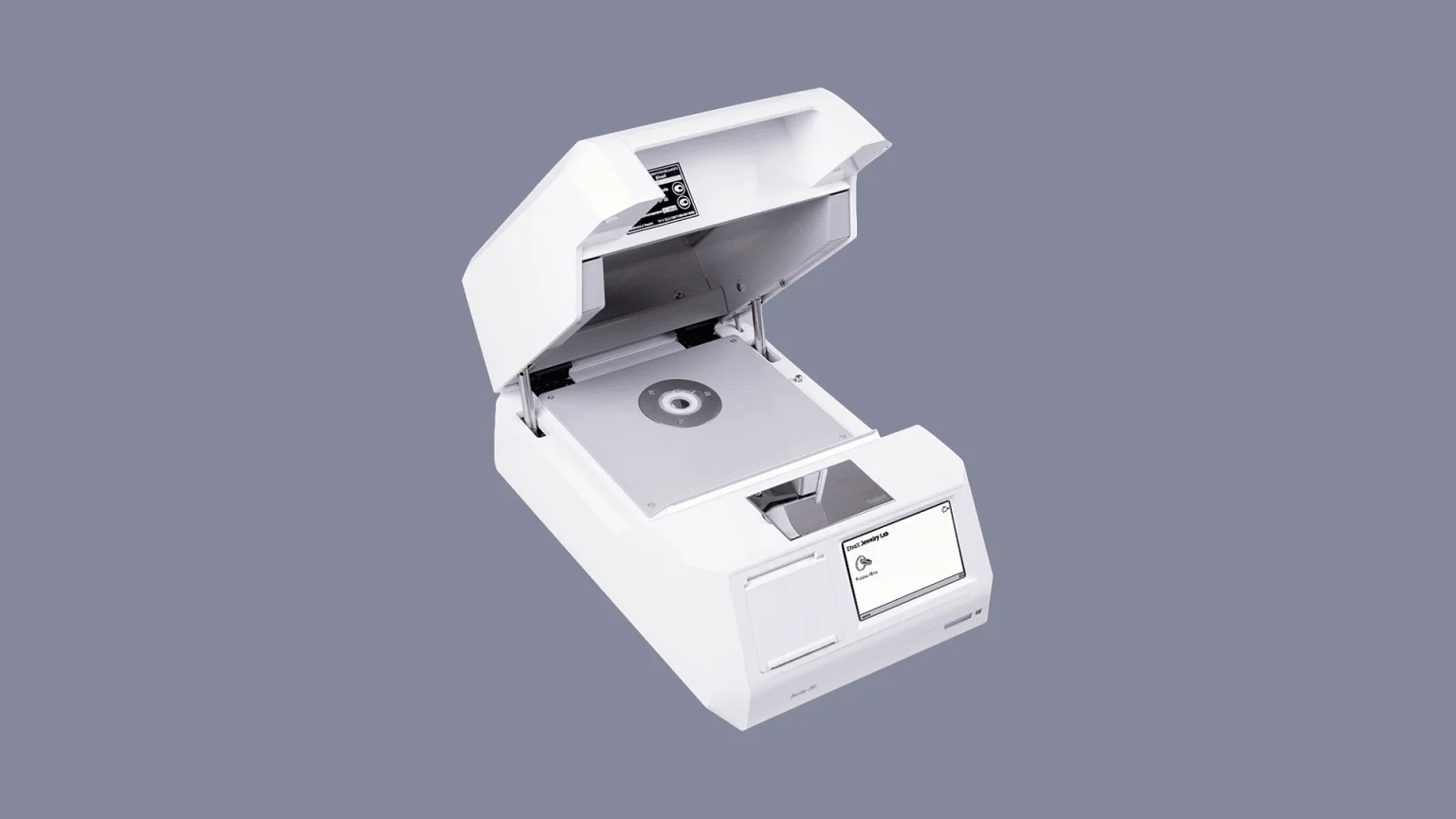
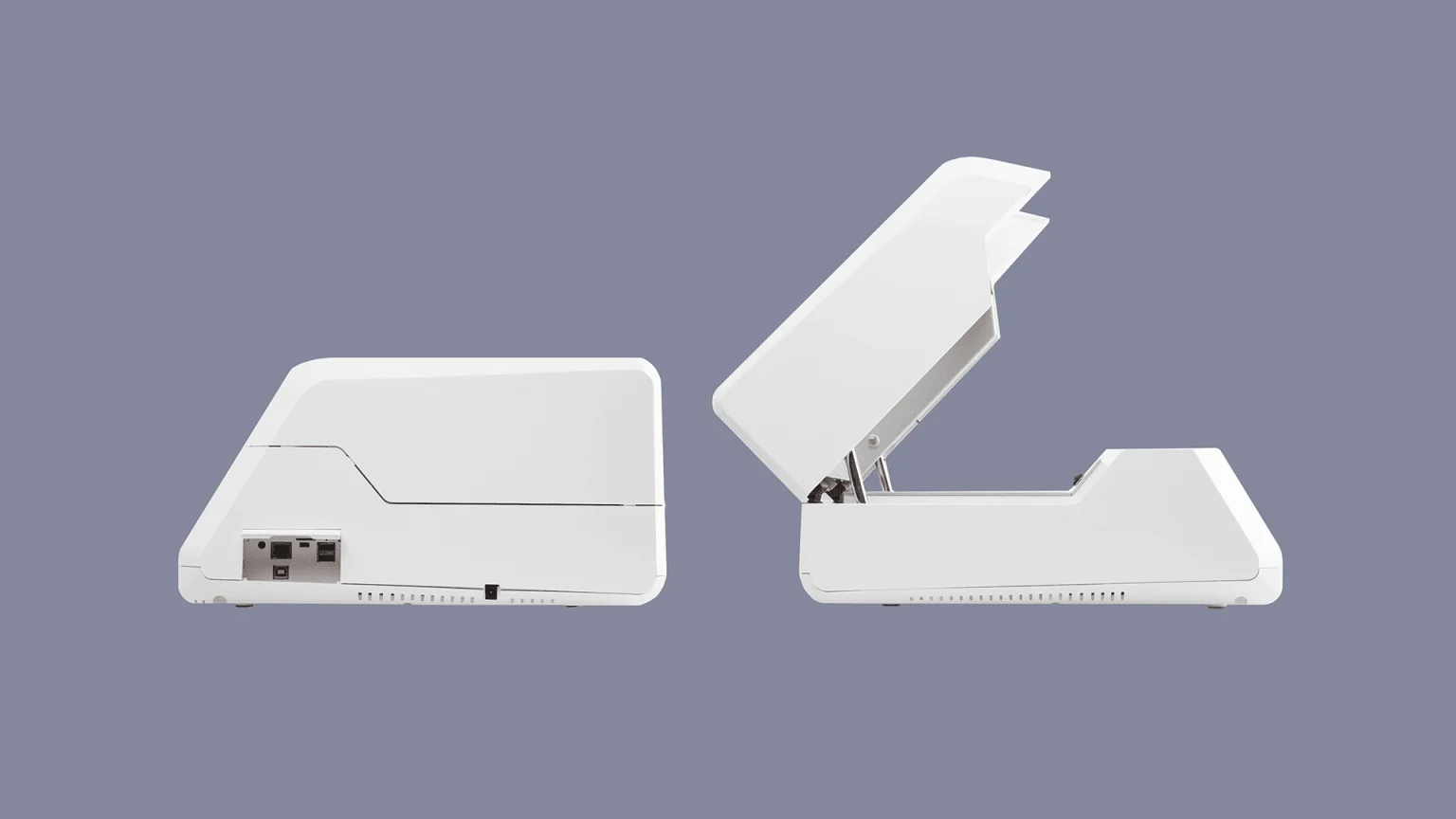
ElvaX Jewelry Lab — a mini-laboratory for high-precision analysis of precious metals and jewellery. A measurement takes only a few seconds, and the result is shown both in percent and in carats. ElvaX Jewelry Lab can also detect coatings and non-standard alloys. It works either with a built-in computer with a high-resolution touch screen or with a PC running the ElvaX software.
The client's main requirement was an enclosure for a desktop spectral analyzer that could be used both in laboratories and in jewellery shops. The enclosure had to shield harmful radiation, be safe in operation and be as convenient to use as possible.
We wanted a minimalist enclosure that would best suit how this mini-laboratory for metal and alloy analysis is used. At the same time the whole model had to stay simple, so that neither its size nor the complexity of the design would drive up the cost of the enclosure. We paid a lot of attention to the ergonomics of the instrument.
The main challenges the team faced:
1. Designing large parts with flat surfaces so that they mould without defects. It is not a difficult task for engineers, but it takes real expertise and particular care. Rapid prototyping cannot reveal errors of this kind, so every enclosure part is checked several times to rule out all risks before the first production sample.
2. Combining ready-made metal mechanical assemblies with plastic enclosure parts. The parts list included standard metal fasteners, plates, brackets, lifting mechanisms, and transparent and opaque plastic enclosure parts. Designing the complete assembly in CAD meant fitting all these assemblies and the electronics to the enclosure parts, taking the mechanical properties of each into account.
3. Placing the analyzer unit and shielding it against radiation.
This was essential for safe operation. A special shielding screen had to be built around the chamber where the spectral analysis takes place. Because we provide prototyping on every project, we could quickly check the geometry of this chamber with its shielded enclosure parts, as well as the internal space for the ready-made mechanical assemblies, the touch screen and the mini-printer for analysis certificates, which also became part of the instrument.
4. The colour scheme and calibrating the white in series production.
For the base model we chose a glossy white enclosure. Later, as batches were produced at different times, the white of the plastic did not always match, and some mouldings had to be rejected. The right shade was achieved after several trial mouldings. Later still, for marketing and production reasons, several more colour schemes were developed for sale in other regions.
The project took the team 1.5 years.
Our contribution:
• Series production of enclosures
Project achievements:
• In series production


We use analytics cookies (Google Analytics) only with your consent. You can change it at the bottom of the page.
