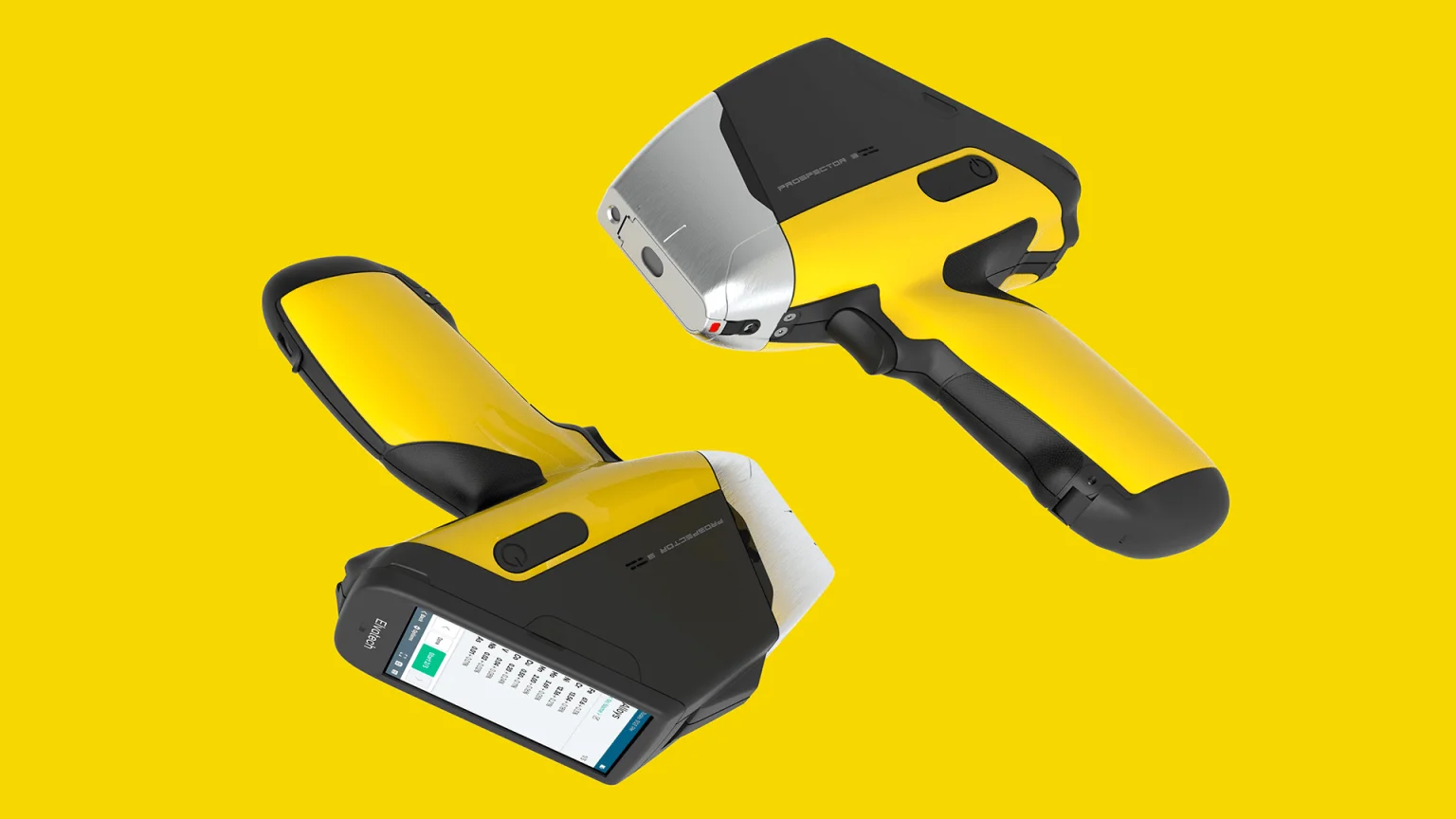
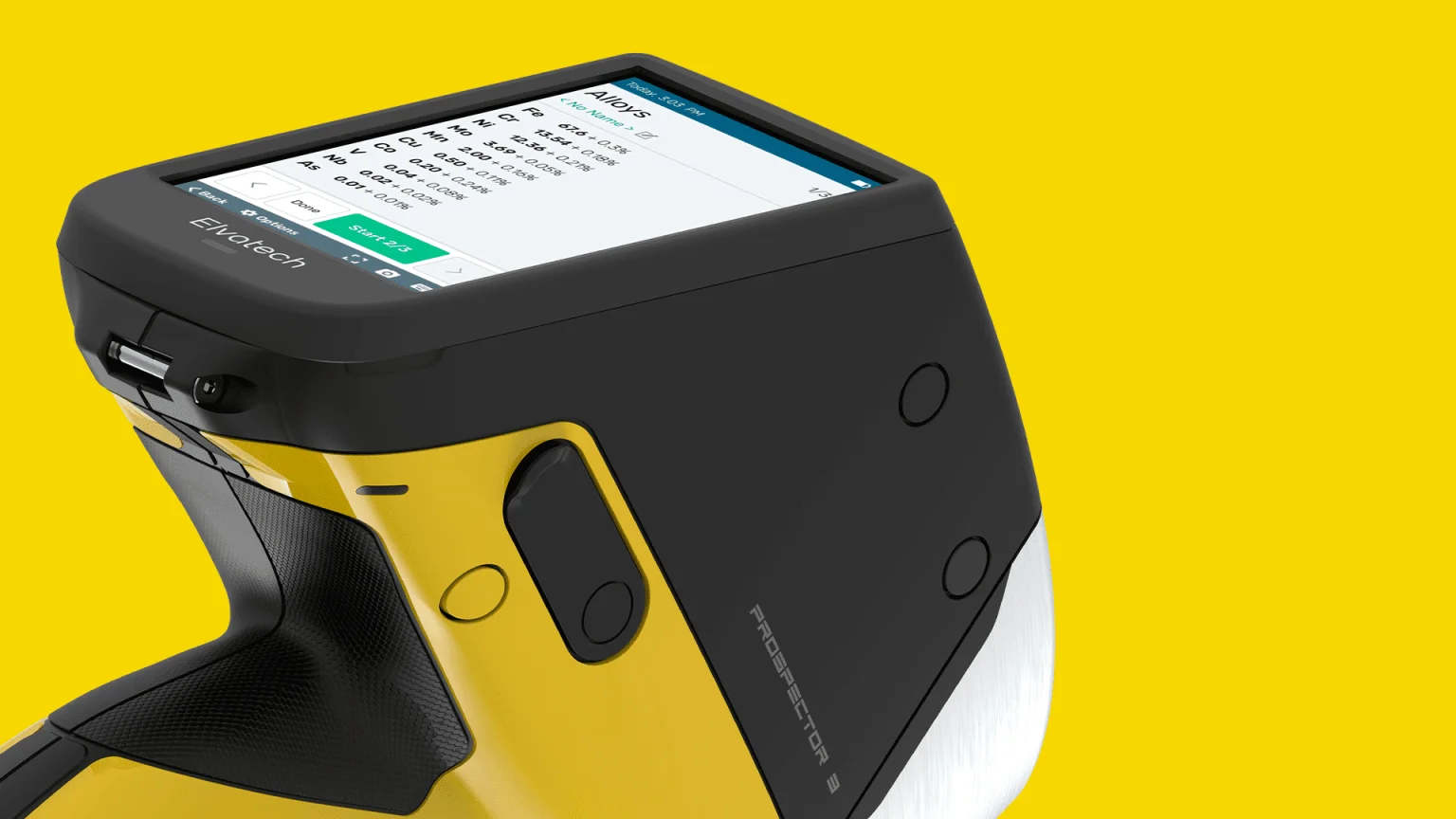
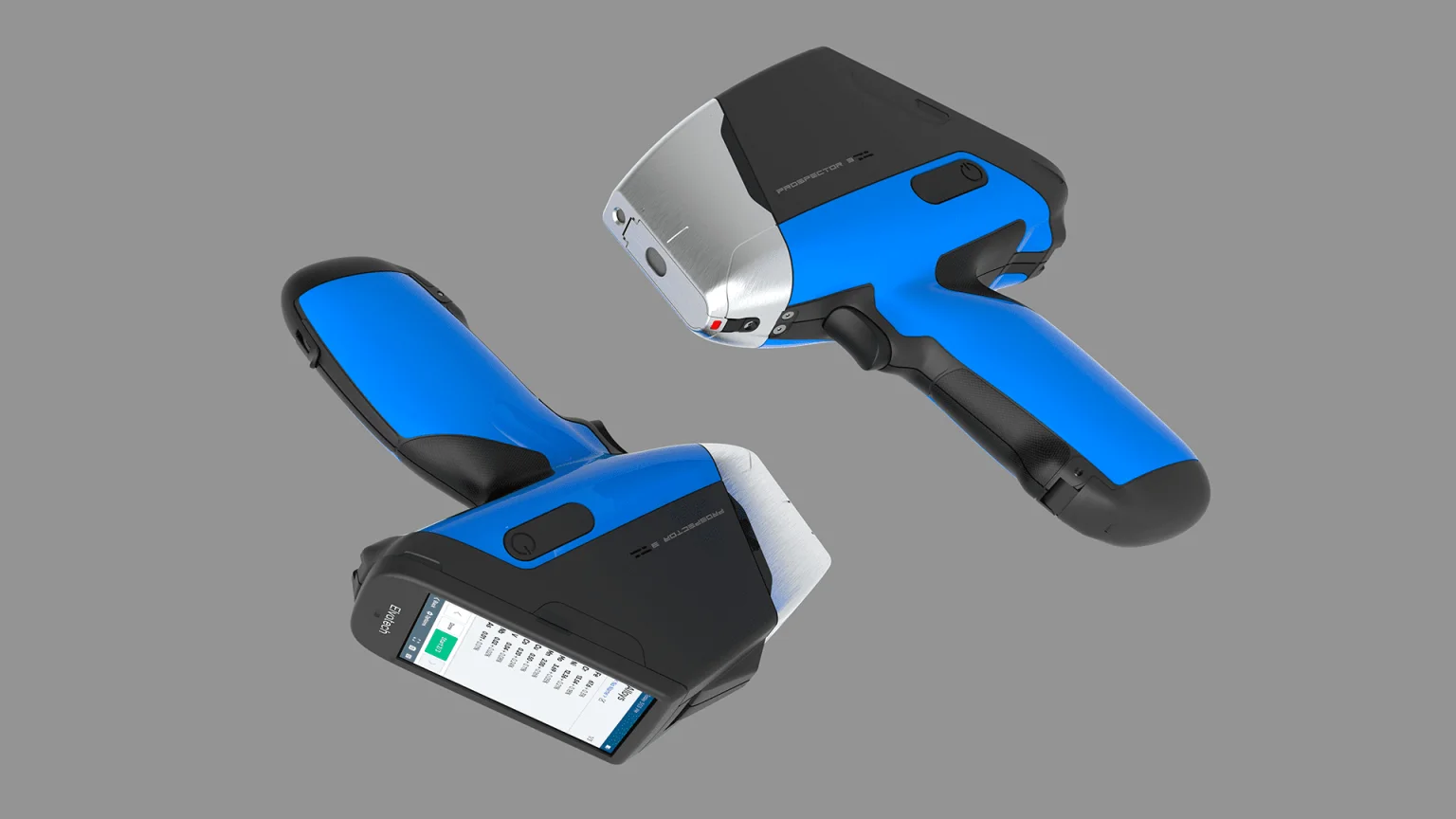
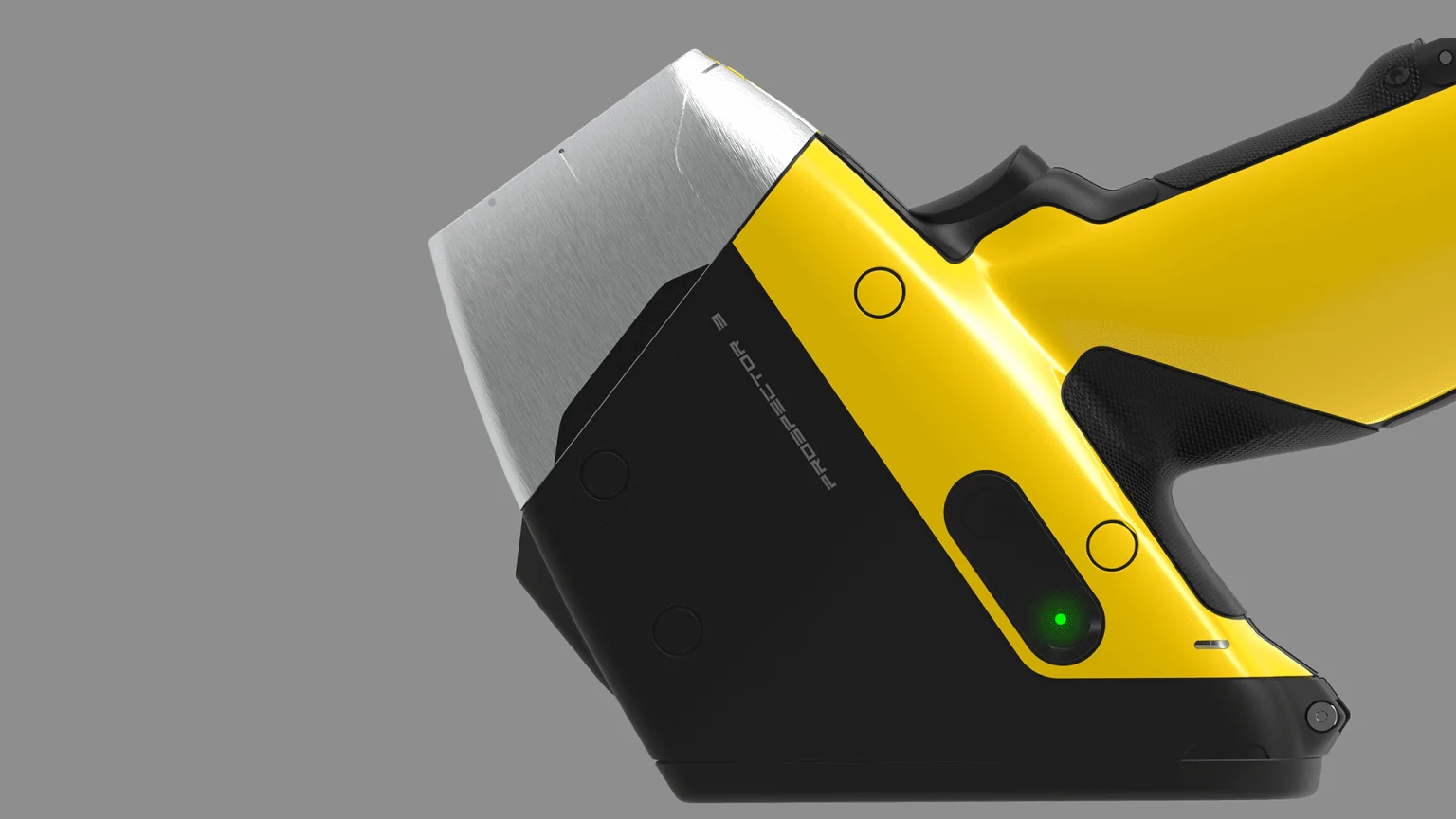
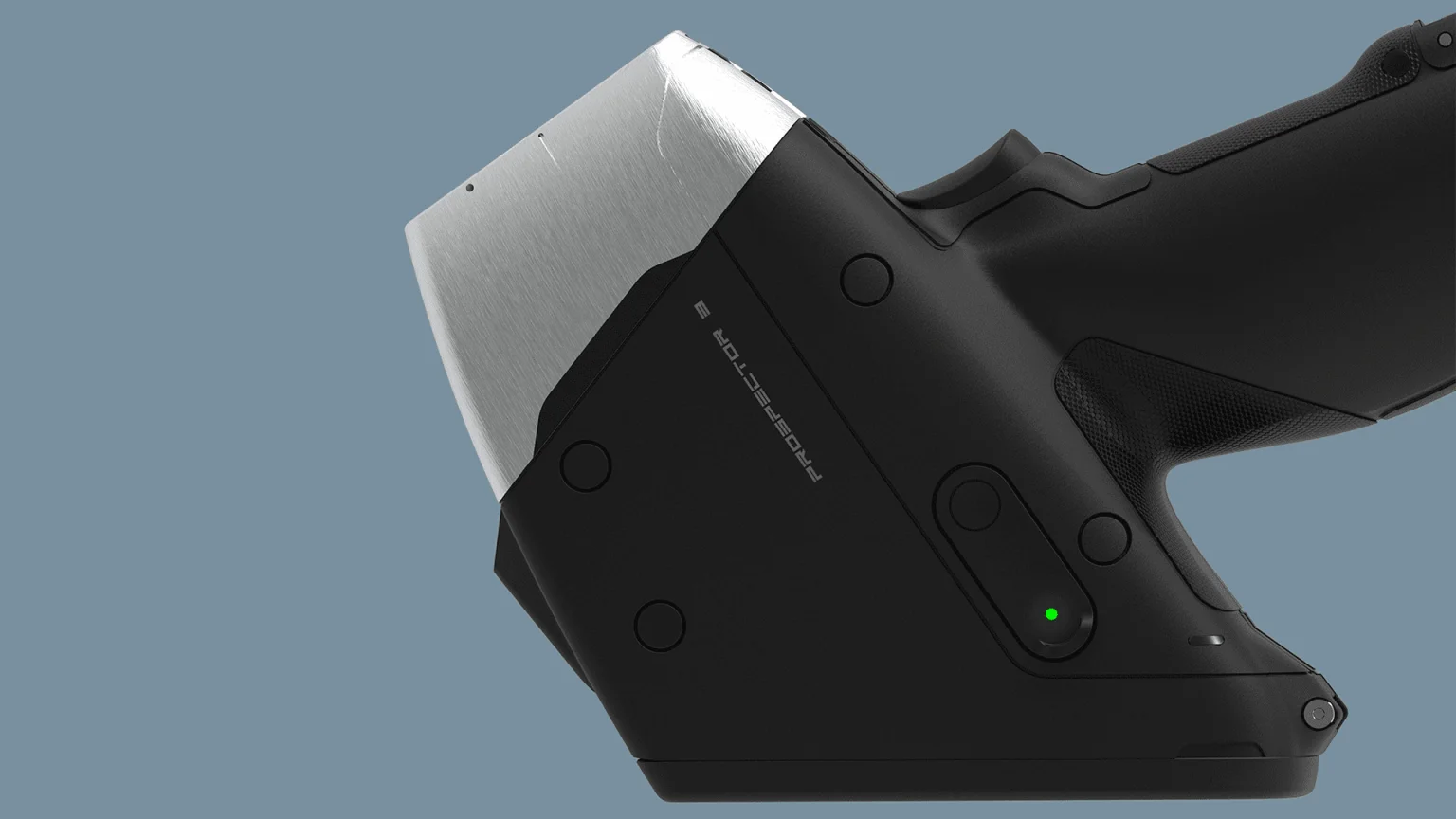
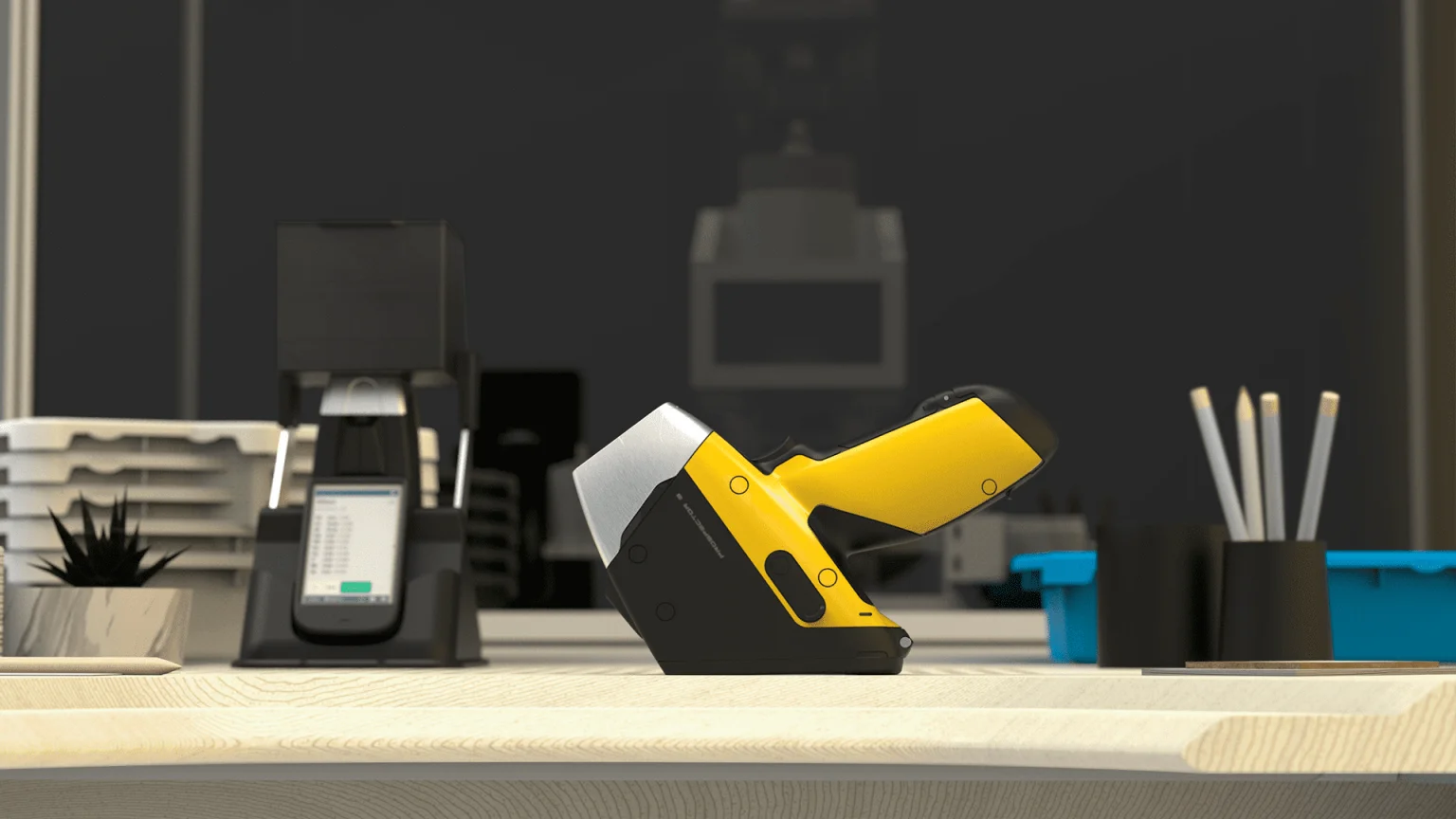
ProSpector — a new-generation portable analyzer for metals and other materials. It offers a new level of analysis accuracy and detection limits, high speed and a wide range of applications. ProSpector 3 is the fastest, smallest and lightest handheld X-ray fluorescence analyzer on the market. Unique data-processing algorithms and intuitive software make high-precision elemental analysis easy for many materials: metals, alloys, ores, plastics, automotive catalysts and more.
In this project we put particular emphasis on the industrial design stage.
The client set out the basic requirements: a modern design, small size and a reliable build. The design had to be ahead, in every sense, of the competing devices then on the Western market. A separate stage was the study of similar products and an analysis of their design. We also paid special attention to safe handling, because the device works with X-ray (ionising) radiation.
From the start it was clear that the product would have a relatively complex design and a high selling price, so we gave the search for the basic design concept top priority. The main design goal was to follow current trends in form and overall style while delivering all the core functionality.
While developing the industrial design we ran into the following difficulties:
1. The narrow width of the device. It proved too narrow: the engineers struggled to fit the complex package of emitters and electronics while providing a high level of moisture protection. The electronics had to be reworked many times before every component fitted into the specified enclosure size.
2. Higher demands on the protective properties of the enclosure parts, because the device is used outdoors rather than indoors. Its size could not be increased, and part of its functionality depends on optics (such devices should not be shaken or knocked). So we gave the enclosure a safety wrist strap that stops the device from being dropped. A case with soft padding for safe transport and storage was also added to the kit.
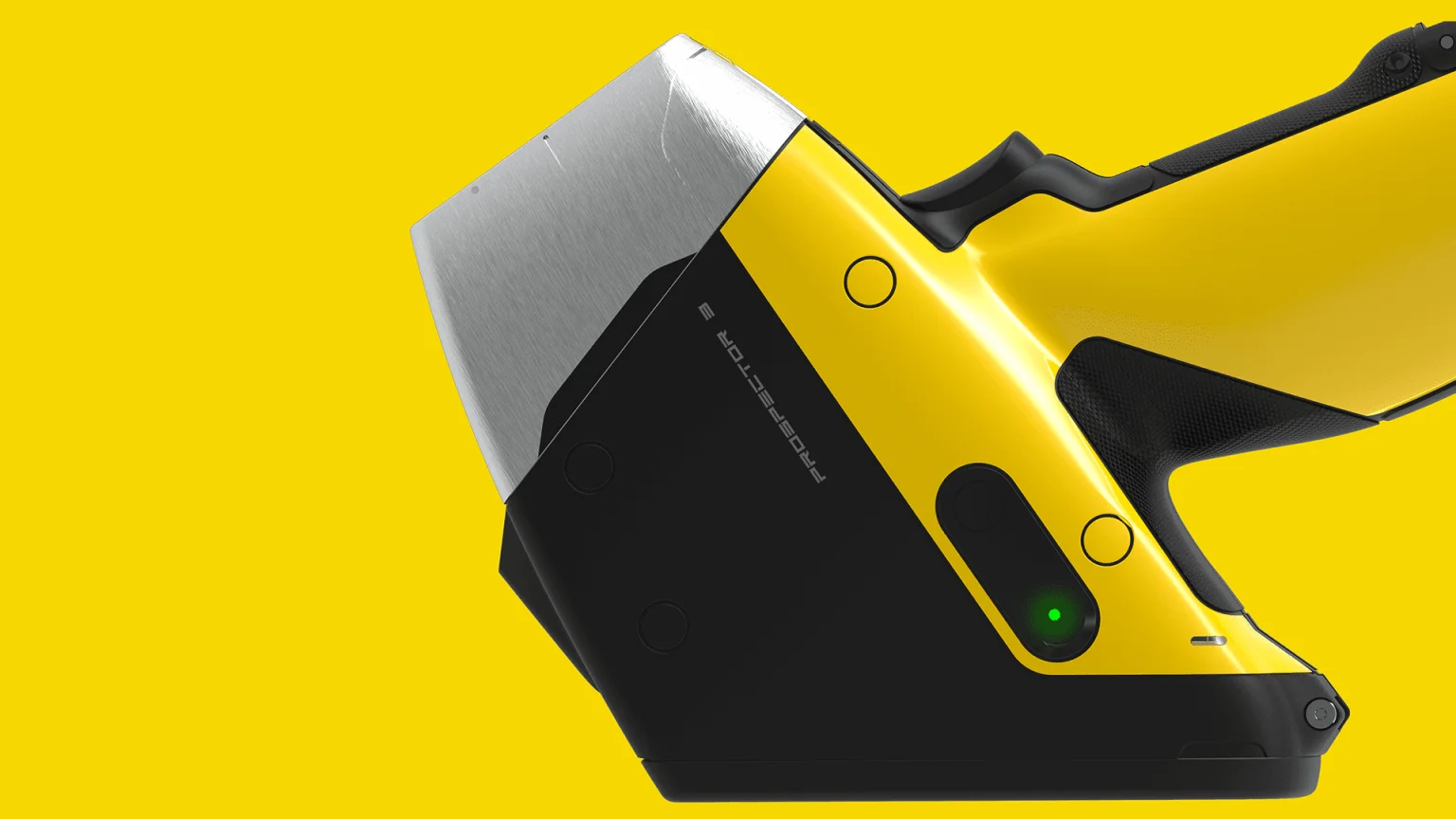
3. The ring indicator at the front of the device. The original design of the indicator unit at the front could signal X-ray emission from every viewing angle. It was the most functional solution and had not been seen in competing products. However, the team could not seal such a unit against moisture while keeping it manufacturable, so we replaced it with a more conservative solution: two large indicator lights on the sides of the device. The design changed, but the overall look of the device did not suffer.
4. The battery cover. The latch on the battery cover went through several iterations before we found a compromise between easy one-handed opening, reliability and appearance.
5. Three-shot injection moulding of the main parts. The handle had to be redesigned to suit the injection moulding process.
In the end, the chosen design concept fully met the original brief and offered a promising design that made the device as compact and mobile as possible. It also allows the batteries to be hot-swapped (without switching the device off) and, with an optional stand, turns the device into a stationary laboratory for chemical element analysis.
Overall, the project took 3.5 years.
Our contribution:
Project achievements:
• In series production


We use analytics cookies (Google Analytics) only with your consent. You can change it at the bottom of the page.
