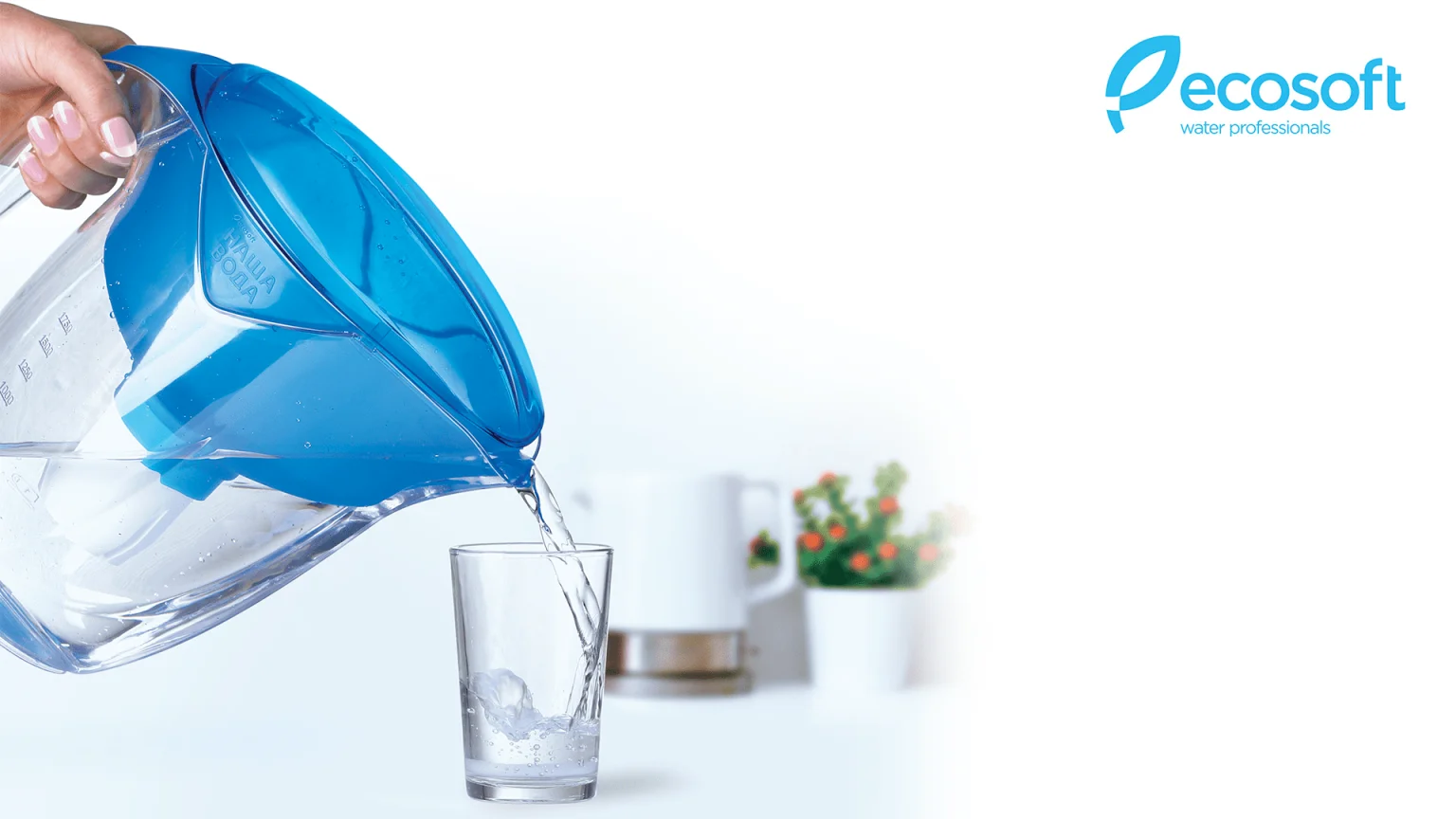
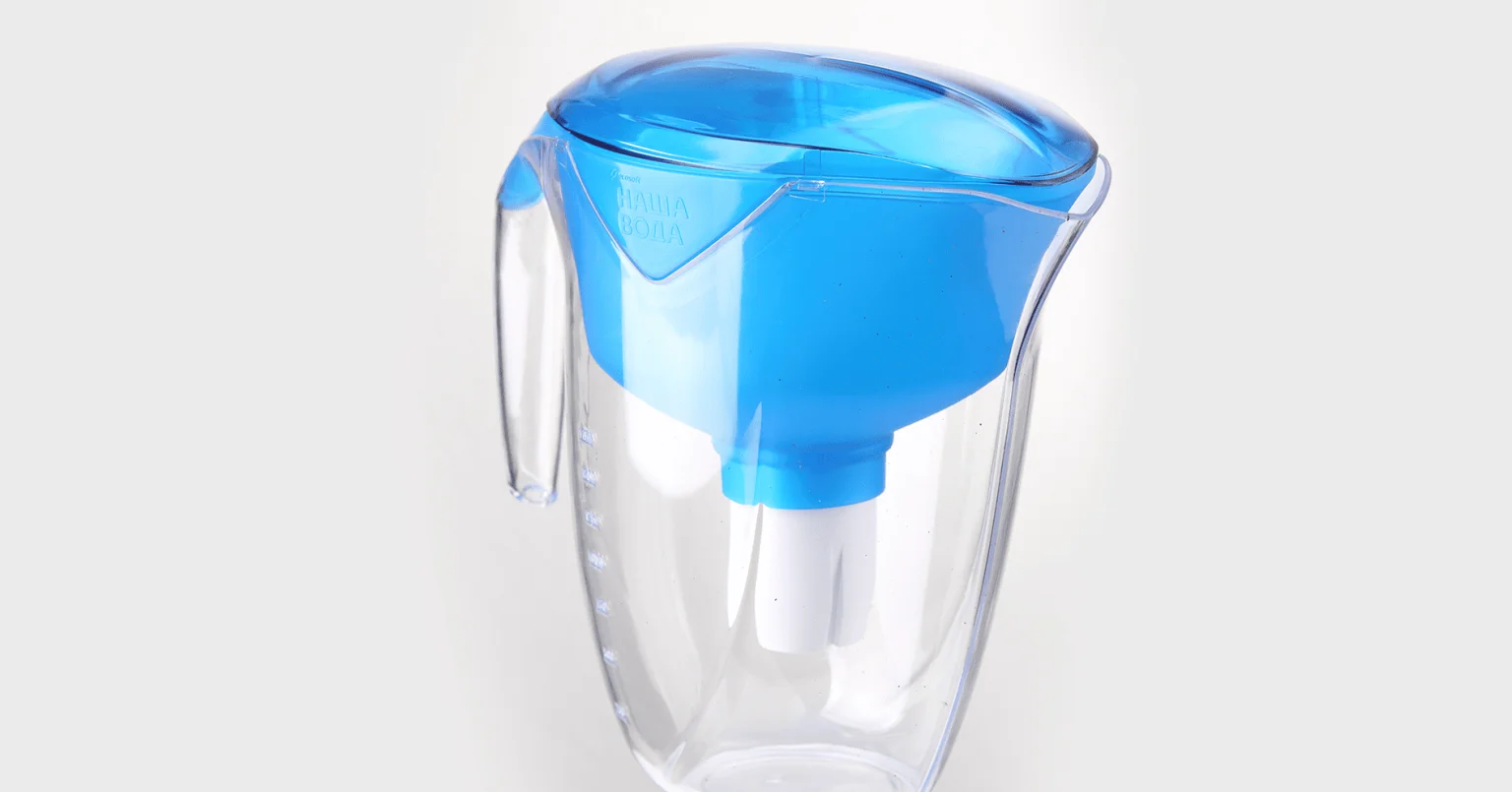
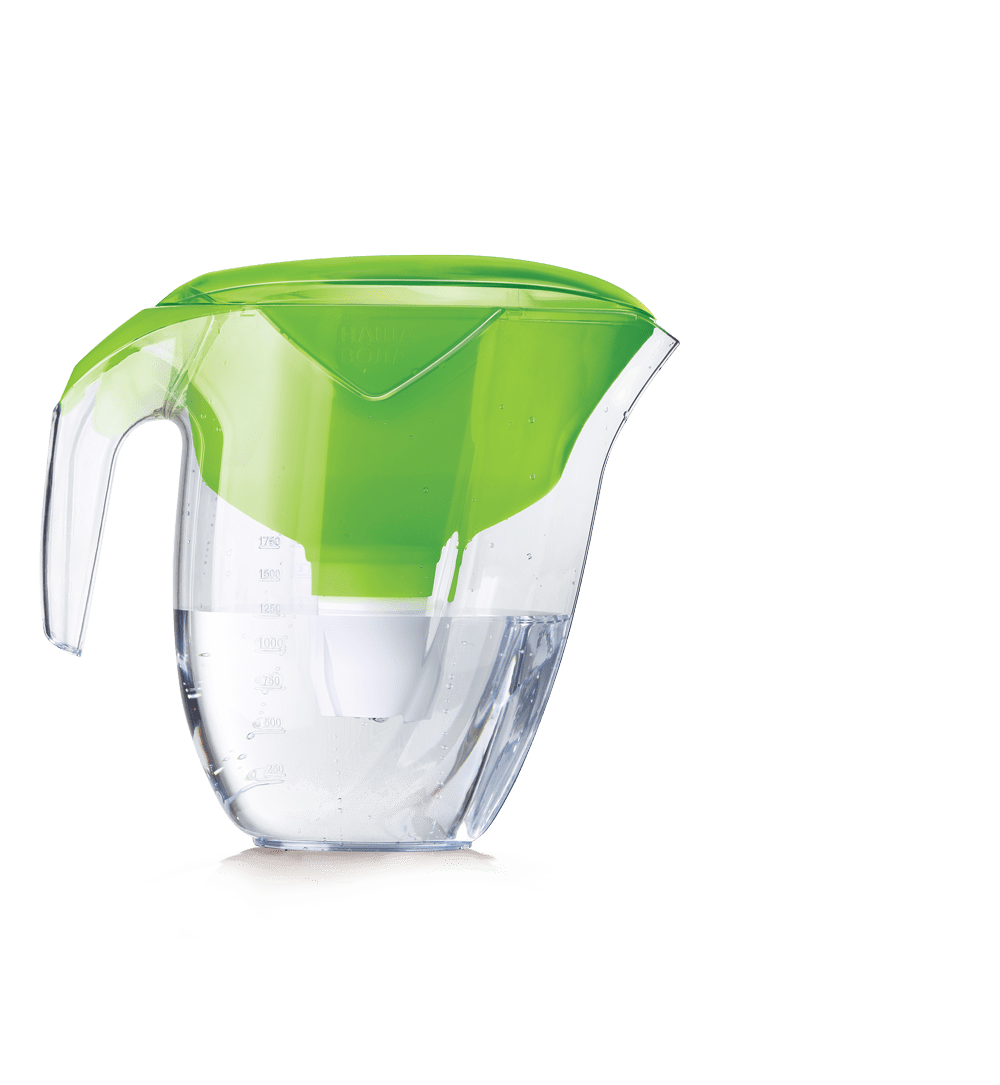
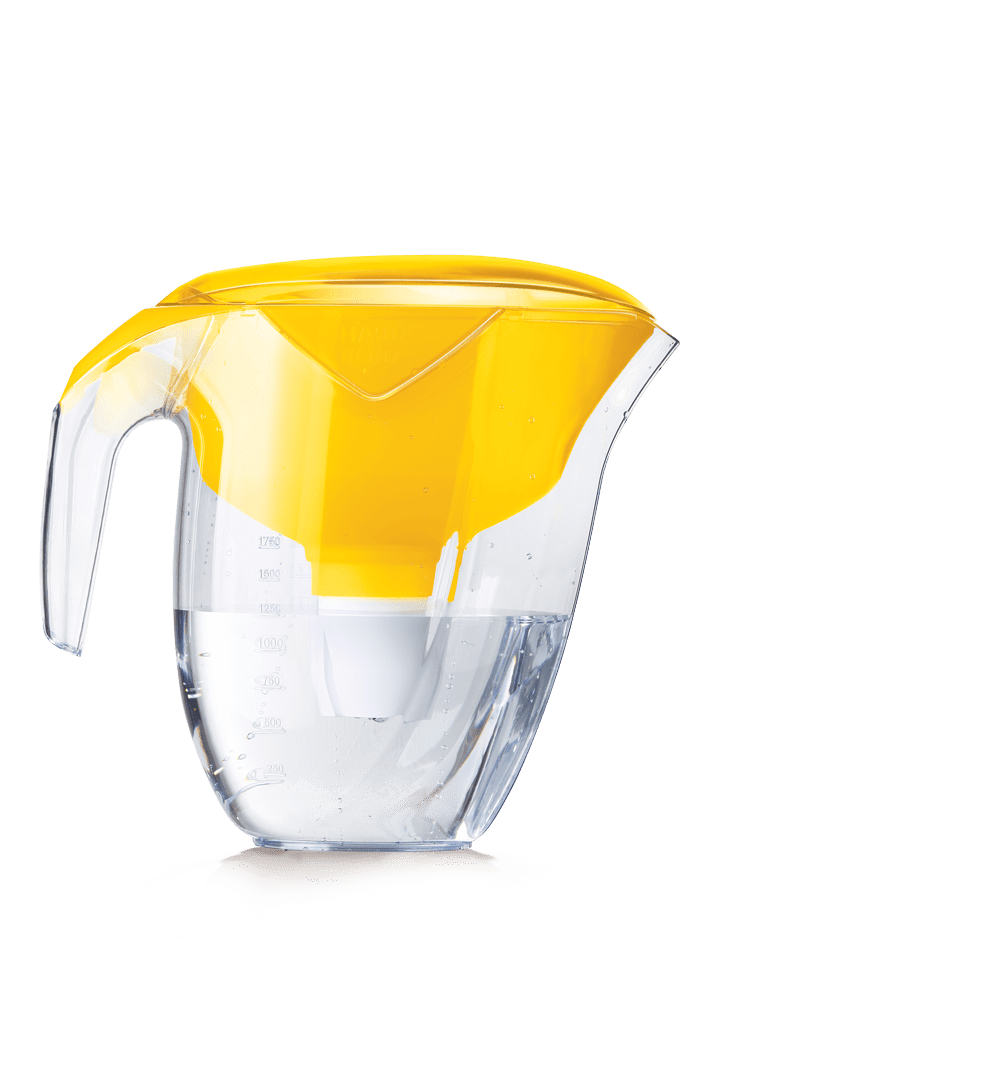
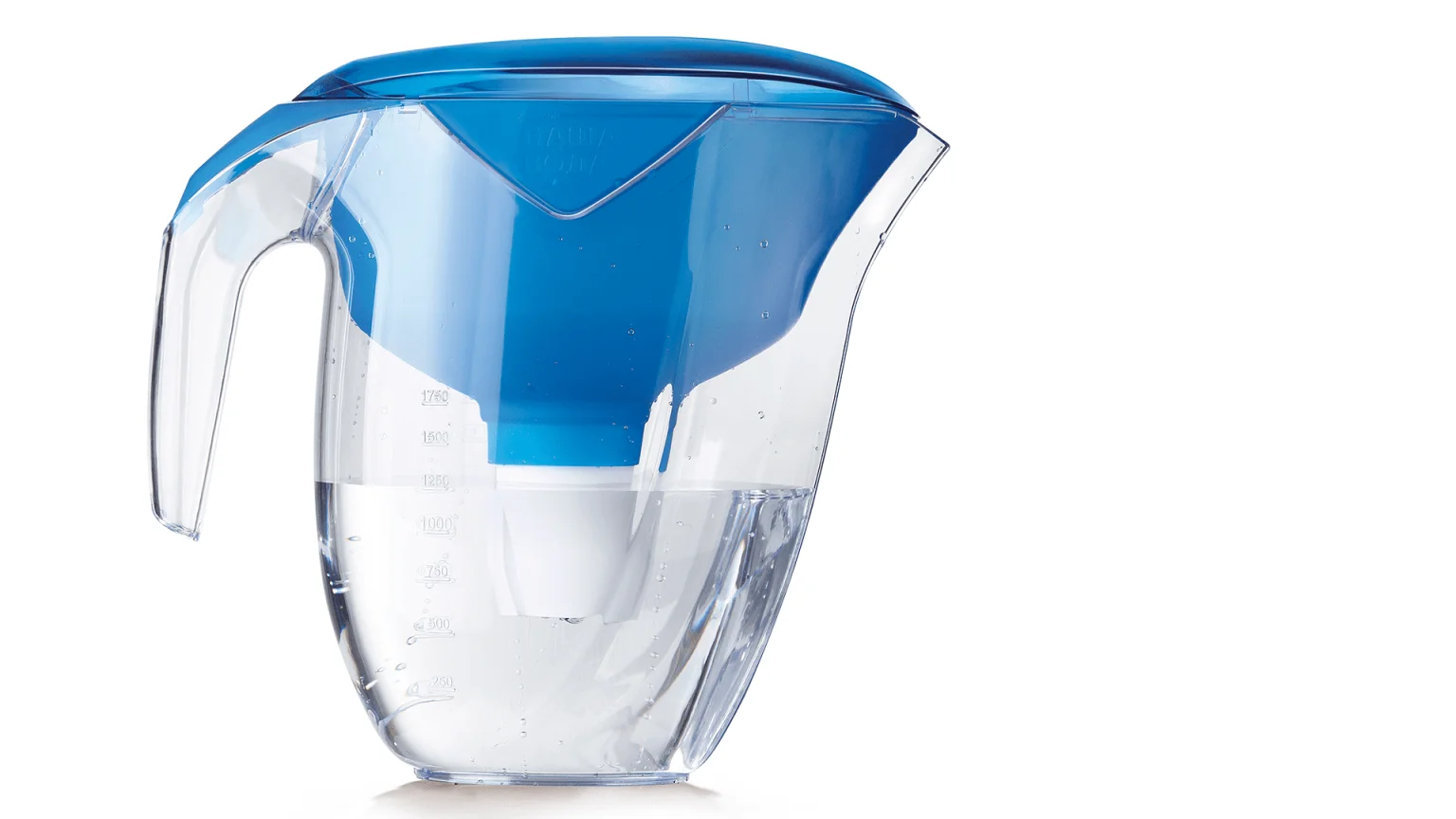
NEMO filter jug — a compact, simple way to purify water at home.
The filter needs no plumbing and no complicated maintenance: you pour clean water into a glass and simply refill the jug for the next portion. There is room for a filter jug even in the smallest kitchen.
Before work began, the client wrote a detailed brief. One of its key points was a filter jug that would look as attractive as possible while not being too expensive to produce.
This requirement turned the whole development towards studying current trends in industrial design. When production means are limited, it is precisely hitting a popular trend that creates a product's visual value. By a trend in industrial design we mean not only fashionable shapes, textures and colours and the ways they are combined, but also good proportions and the lines of the parting joints.
The first sketching stage is the search for the basic form factor.
In design, as in any other visual art, you move from the overall form in the early stages to more detail in the final ones. When drawing the overall shape, it is worth looking at the tectonics of water and glass — the natural materials most associated with this kind of product.
Modern industrial design is characterised by clean surfaces, where the surfaces of different parts flow into each other. This effect is usually achieved with hidden supporting parts that hold the visible outer parts “in the right way”. With few parts, there is a risk that design constraints will prevent the desired effect — for example, when parts are forced to overlap, which complicates the surface. The result looks cheap and unattractive, and elements of the form seem out of place.
By today's trends, the body of the jug should be geometrically simple. Faceted surfaces are best avoided as far as possible. More expensive jugs tend to use shapes of revolution or more complex shapes with an even surface curvature. The body must not taper towards the top, because it has to meet the requirements of injection moulding.
It was also important not to overload the jug with unnecessary parts and not to create recesses that are hard to wash.
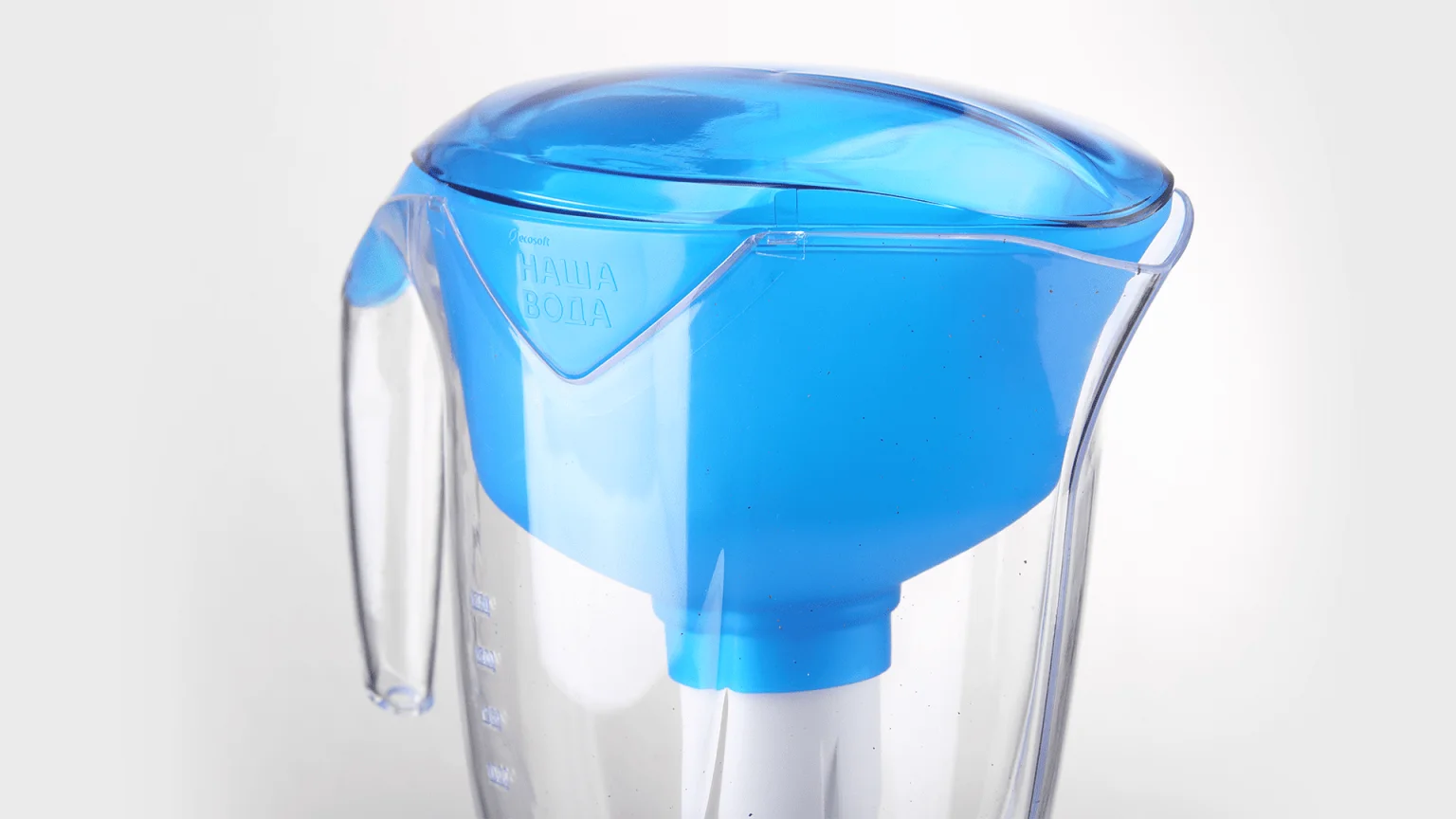
Another client requirement was a matt funnel. In everyday use, limescale builds up on the funnel and it turns cloudy, so to keep the product looking good after long use with tap water, the funnel has to be matt.
For a product where the optical effects of transparency matter, the choice of colour is very important for the overall harmony. If the aim is an image taken from nature, light shades work better; for a bright, artificial-looking object, spectral colours give more expression. The colour of the lid should complement and harmonise with the colour of the funnel.
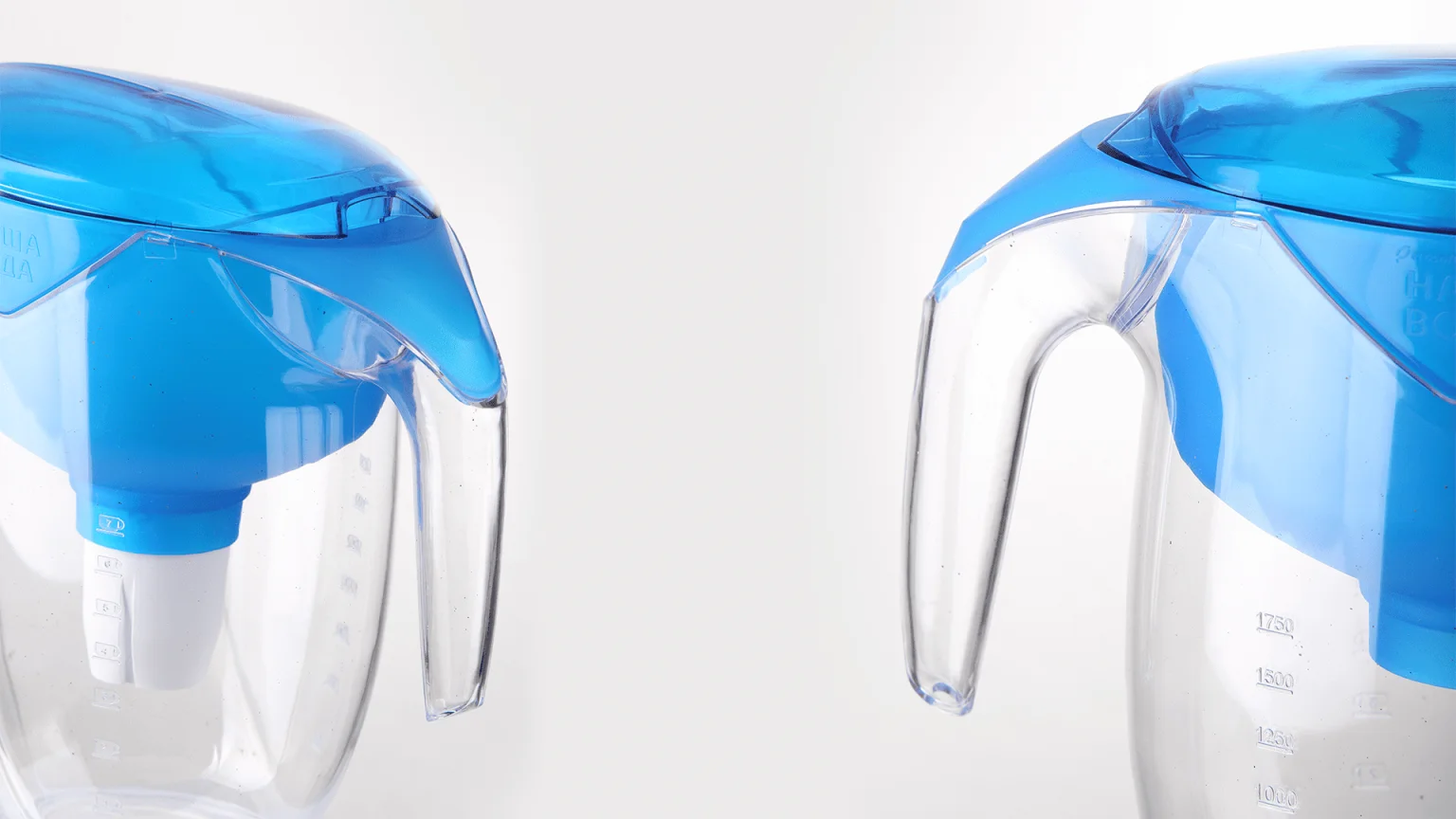
The product needs an ergonomic semicircular handle.
Given the established trend in kettle and jug design, a handle fixed at two points does not look expensive. An online shop's price filter quickly shows what more expensive designs look like: handles fixed at a single point are the more expensive option.
For this reason, we suggested that the client use a handle fixed at one point in the future design.
A small number of parts most often makes a product look cheaper. Design is meant to solve this through originality and innovation — but new solutions should be introduced with care, because the target audience may perceive new approaches differently.
Another important aspect of the design is how the product fits into the interior and the kitchen, with its own “ensemble” of tableware.
Our contribution:
Project achievements:
• In series production


We use analytics cookies (Google Analytics) only with your consent. You can change it at the bottom of the page.
